general
Indian Institute of Science (variant 5) 2026 Review — Programs, Admissions, Cost & Student Experience
Explore IISc Bangalore's 2026 landscape with a data-driven breakdown of research programs, admission competitiveness, tuition costs, and campus life. Essential reading for science and engineering aspirants.
The Indian Institute of Science (IISc) in Bangalore remains the gold standard for scientific research and postgraduate education in India. In a landscape where global rankings increasingly favor interdisciplinary research output, IISc continues to hold its ground. According to the QS World University Rankings 2025, IISc is positioned within the global top 225 institutions and is the highest-ranked Indian university for research citations per faculty. Data from India’s Ministry of Education further confirms that IISc accounts for nearly 10% of all patented research outputs from Indian higher education institutions. This 2026 review provides a granular look at its academic architecture, the fiercely competitive admission funnel, the actual cost of enrollment, and the lived student experience.
Academic Architecture and Flagship Research Programs
IISc’s program structure is built on a postgraduate-heavy model, with over 40 departments across six divisions. The institution is not merely an engineering school; it is a comprehensive research university. Advanced research programs in aerospace engineering, materials science, and computational biology consistently attract the highest volume of applicants.
The four-year Bachelor of Science (Research) program remains an anomaly in the Indian education system, offering direct entry into a research ecosystem typically reserved for PhD candidates. At the postgraduate level, the M.Tech and PhD integrated programs are the institution’s backbone. A key differentiator is the Thesis-Based Assessment Model, which prioritizes original research over standardized examination scores. The Centre for Nano Science and Engineering (CeNSE) and the Supercomputer Education and Research Centre (SERC) function as autonomous hubs where students from diverse disciplines converge to solve complex problems in climate modeling and quantum hardware.
The 2026 Admission Funnel: A Statistical Deep Dive
Gaining entry to IISc is a high-stakes statistical challenge. For the 2025–26 academic cycle, the institute received approximately 40,000 applications for roughly 1,200 postgraduate and research seats, translating to an acceptance rate of just 3%, according to internal admission office data. This selectivity places IISc ahead of many Ivy League engineering schools in terms of sheer competitiveness.
The primary entry gateways are the GATE (Graduate Aptitude Test in Engineering) for M.Tech programs and the IISc Entrance Test for the Bachelor of Science and PhD streams. For 2026, the cut-off trends indicate that a GATE score below 750 (out of 1000) in core engineering disciplines is no longer competitive for top-tier specializations. The Joint Admission Test for M.Sc. (JAM) is the route for pure sciences, where the qualifying percentile now hovers above the 99th mark for physics and chemistry. The institute heavily weights the personal interview stage, where panels assess a candidate’s research aptitude and ability to defend a proposed hypothesis under pressure.
Decoding the Cost of Education and Funding Mechanisms
Contrary to the perception of elite education being prohibitively expensive, IISc operates a highly subsidized fee structure for domestic students, supported by Ministry of Education grants. The typical annual tuition fee for an M.Tech program stands at approximately ₹29,200 (around $350), with incidental fees pushing the total annual academic cost to roughly ₹50,000 ($600).
However, the financial equation changes significantly for self-financed international students, where tuition can be 10 to 15 times higher. The real economic advantage lies in the Guaranteed Research Assistantship. Every admitted M.Tech and PhD student receives a monthly stipend of ₹12,400 or ₹37,000, respectively, as per the 2026 revised rates. This model effectively nullifies the net cost of living in Bangalore for PhD scholars, as the stipend covers hostel fees and meals, leaving a surplus for academic expenses. The institute’s alumni endowment fund also offers merit-based travel grants for international conference presentations.
Campus Infrastructure and the Bangalore Advantage
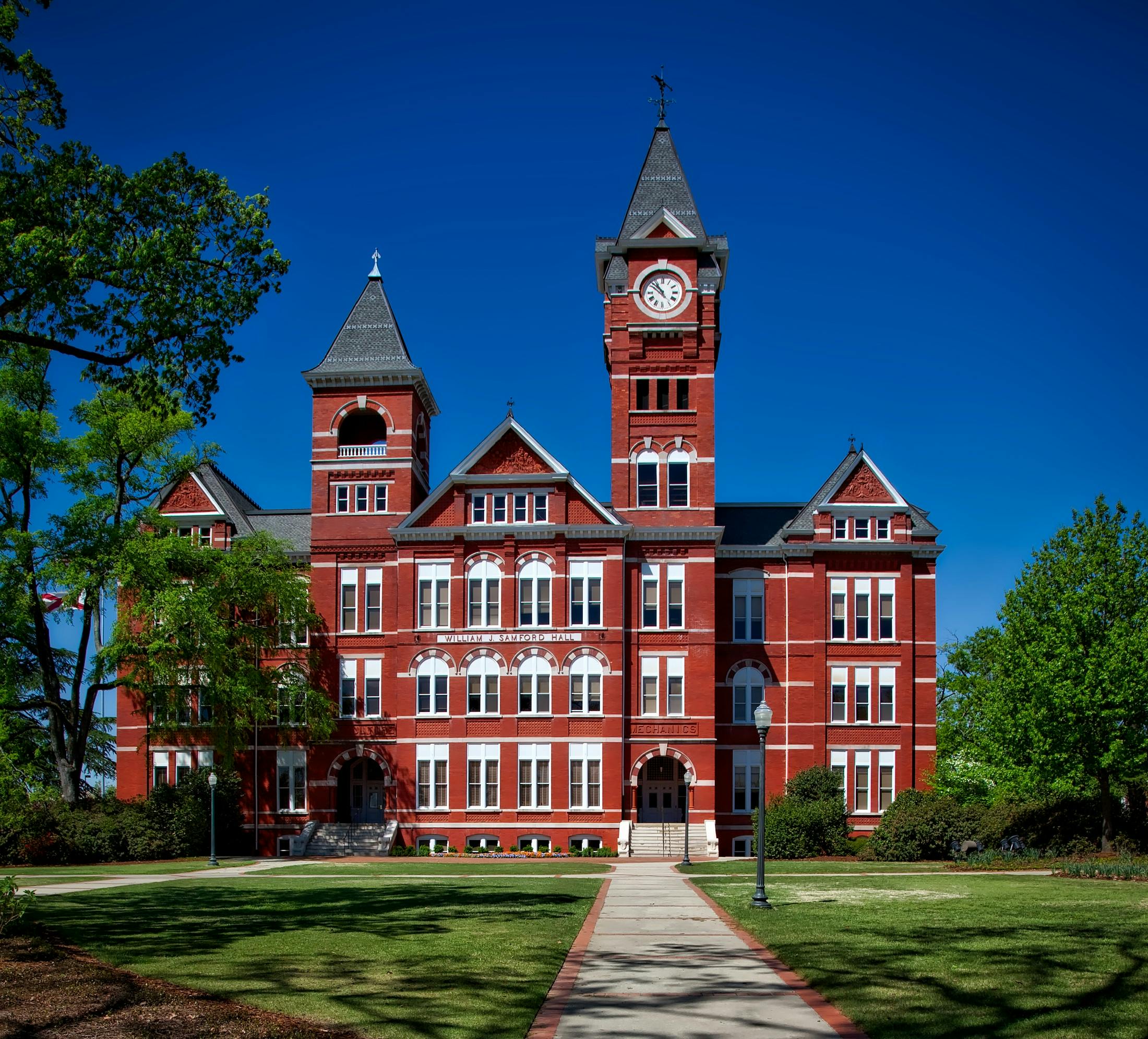
The 400-acre main campus in Bangalore is a self-contained township, often described as a forested enclave within the urban sprawl. The J.R.D. Tata Memorial Library is a critical asset, providing 24/7 access to over 500,000 journals and a digitized thesis repository. In 2026, the campus is fully 5G-enabled, and the high-performance computing (HPC) cluster has been upgraded to support real-time AI model training.
Bangalore’s ecosystem acts as an extended campus. The proximity to the Indian Space Research Organisation (ISRO) headquarters and the aerospace manufacturing belt creates a seamless pipeline for internships. The city’s biotech cluster, including Biocon and Syngene, absorbs a significant percentage of biological sciences graduates. This geographical synergy means that industry-sponsored capstone projects often evolve into full-time positions, a dynamic rarely replicated at this scale outside of Silicon Valley.
Student Culture, Diversity, and Mental Health Support
The residential campus is a melting pot of linguistic and cultural diversity, with over 80% of students coming from outside Karnataka. The Gymkhana is the nerve center of student life, managing over 30 clubs ranging from the Astronomy Club to the Hyperloop team. The annual cultural fest, Aagneya, and the science conclave, Prajna, are entirely student-managed and draw participation from across the globe.
However, the intensity of the research environment has necessitated a robust support infrastructure. The Wellness Centre now operates with a reduced student-to-counselor ratio of 1:300, lower than the national average. Peer mentorship programs, such as the “Buddy System” for incoming junior research fellows, have been institutionalized to mitigate the isolation often felt during rigorous thesis writing phases. The flexible academic timeline, allowing students to pause and resume research under extenuating circumstances, reflects a maturing institutional empathy toward mental health.
Career Trajectories and Alumni Network Dynamics
IISc graduates do not merely seek jobs; they navigate a dual-track system of global academia and deep-tech entrepreneurship. Data from the Placement Office 2025 indicates a median salary of ₹28 lakhs ($33,500) for M.Tech graduates entering the semiconductor and AI sectors, while PhD graduates transitioning to U.S. and European post-doctoral positions command annual stipends exceeding $60,000.
The IISc Alumni Association is a tightly knit global network with significant influence in Silicon Valley and the European Organization for Nuclear Research (CERN). A notable trend in 2026 is the “boomerang entrepreneurship” wave, where alumni are returning to the IISc incubator to build startups in quantum cryptography and precision medicine. The institute’s Society for Innovation and Development (SID) provides seed funding of up to ₹50 lakhs ($60,000) for faculty-student spin-offs, bypassing traditional venture capital gatekeeping.
FAQ
Q1: What is the minimum GATE score required for IISc M.Tech admissions in 2026?
While there is no fixed “minimum,” competitive specializations like Computer Science and Artificial Intelligence typically require a GATE score of 800 or above. Core branches like Mechanical or Civil may close around 750. The institute uses a normalization formula that combines GATE weightage (70%) with interview performance (30%).
Q2: Does IISc offer full scholarships for international students?
Yes, but primarily through bilateral government schemes. International PhD students can secure funding via the ICCR (Indian Council for Cultural Relations) scholarships or specific research grants held by faculty. Self-financed M.Tech international students should budget approximately $6,000–$8,000 per year for tuition, excluding a monthly living expense of $300–$400.
Q3: How does the IISc Bachelor of Science (Research) differ from a standard B.Sc.?
It is a four-year, research-intensive program where students declare a major in the third year. Unlike a standard B.Sc., it mandates a year-long thesis project and allows seamless transition into the PhD program without a master’s degree. The acceptance rate for this program is under 1%, admitting roughly 120 students from a pool of over 15,000 applicants.
参考资料
- Ministry of Education, Government of India 2025 Higher Education Statistics Report
- QS World University Rankings 2025: Indian Institute of Science Profile
- IISc Bangalore Office of Admissions 2025–26 Annual Admission Statistics
- IISc Wellness Centre 2025 Student Support Metrics
- IISc Placement Office 2025 Sectoral Salary Analysis