general
Thailand University System 2026: How Thai Top 5 Ranks Globally — research angle
A data-driven analysis of Thailand's university system in 2026, examining how its top five institutions perform on global research metrics, internationalization, and graduate outcomes against ASEAN and world benchmarks.
Thailand’s higher education sector enrolled over 1.5 million students across 155 institutions in 2024, according to the Ministry of Higher Education, Science, Research and Innovation (MHESI). Yet only a handful of these universities appear in global rankings, and just five consistently break into the top 1,500 in the QS World University Rankings 2025. For researchers, doctoral candidates, and policy analysts, the question is not whether Thai universities are improving—they are—but whether the pace of improvement matches the country’s ambition to become an ASEAN education hub. This article dissects the Thai university system through a research lens, benchmarking its top five institutions on citation impact, faculty credentials, international collaboration, and graduate employability.
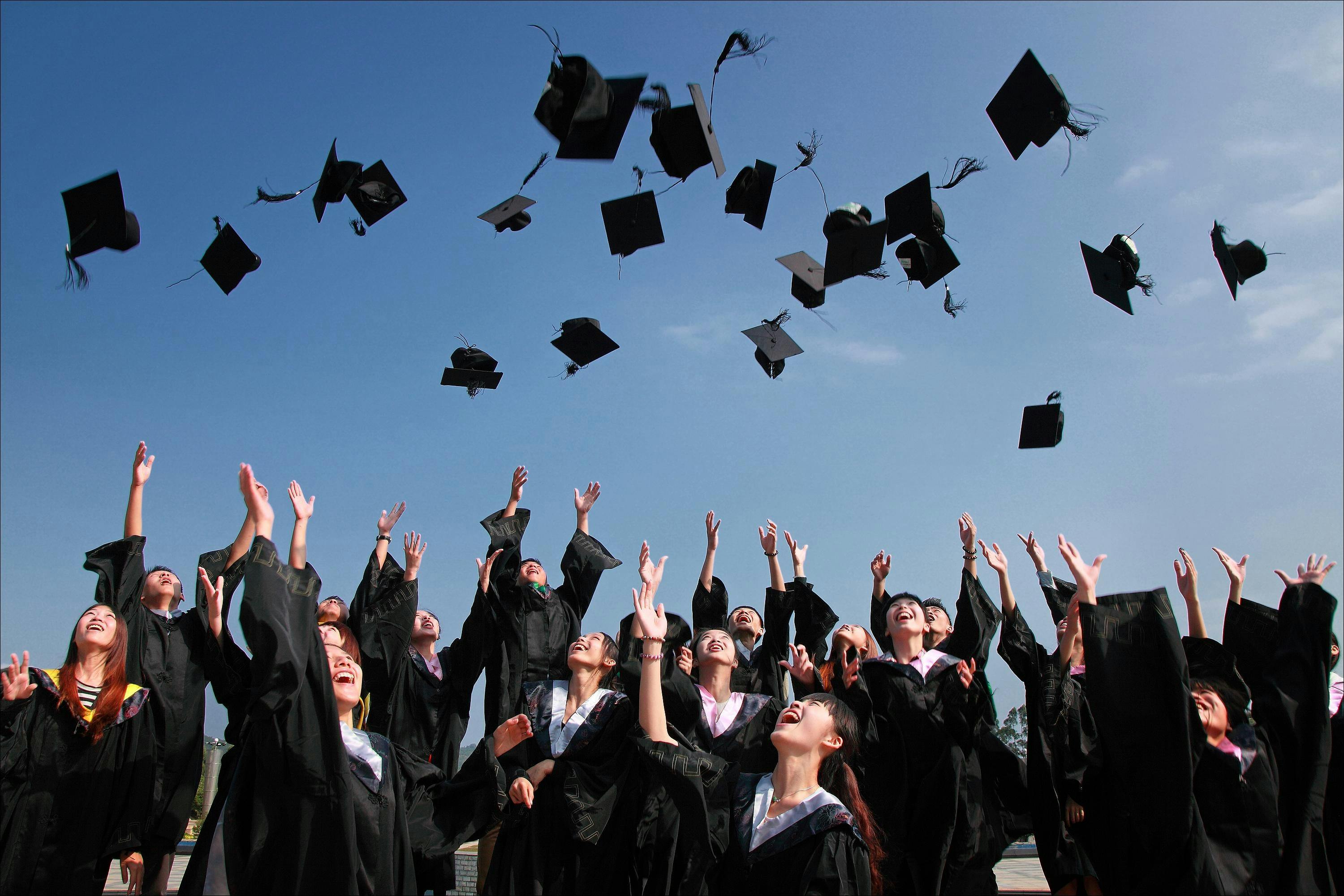
The Architecture of Thailand’s University System
Thailand’s university landscape is a dual structure of public universities and private higher education institutions, governed by the MHESI. Public universities dominate research output and international visibility, while private colleges focus primarily on teaching and vocational programs. The system includes autonomous universities, Rajabhat universities (formerly teacher training colleges), and Rajamangala universities of technology, each with distinct mandates.
Research funding flows primarily through the National Research Council of Thailand (NRCT) and the Thailand Science Research and Innovation (TSRI), with total R&D expenditure reaching approximately 1.33% of GDP in 2023, according to UNESCO Institute for Statistics data. This figure trails the OECD average of 2.7% but represents a steady climb from 0.5% two decades ago. The concentration of research activity is stark: the top five universities account for over 60% of Thailand’s internationally indexed publications, based on Scopus data from 2019-2024.
Autonomous vs. Traditional Public Universities
The autonomous university model, adopted by Chulalongkorn and Mahidol in the late 1990s and now encompassing over 20 institutions, grants greater flexibility in financial management, curriculum design, and international partnerships. These universities consistently outperform traditional civil-service institutions on research metrics. A 2025 MHESI performance audit showed autonomous universities averaged 3.2 publications per full-time faculty member annually, compared to 0.9 at non-autonomous public universities.
How the Thai Top 5 Perform on Global Research Metrics
For this analysis, we define the Thai top five as Chulalongkorn University, Mahidol University, Chiang Mai University, Kasetsart University, and King Mongkut’s University of Technology Thonburi (KMUTT)—the institutions most consistently ranked in QS, THE, and ARWU tables. Their performance reveals both strengths and structural limitations.
Citation Impact and Field-Weighted Citation Index
Mahidol University leads Thai institutions with a Field-Weighted Citation Impact (FWCI) of 1.18 over the 2020-2024 period, meaning its publications are cited 18% more than the global average for comparable fields. Chulalongkorn follows at 1.09, while KMUTT achieves 1.04. These figures, drawn from SciVal/Scopus data, place Thailand’s elite universities above the ASEAN average of 0.87 but well below Singaporean institutions (NTU: 1.62, NUS: 1.71).
The citation advantage is heavily concentrated in clinical medicine, pharmacology, and engineering. Mahidol’s tropical medicine research, for instance, generates citation rates 2.3 times the global average. However, social sciences and humanities output remains citation-poor, with FWCI values below 0.6 across all five institutions.
Research Volume vs. Research Quality
Thailand’s total Scopus-indexed output grew from 12,500 publications in 2015 to approximately 24,000 in 2024, a compound annual growth rate of 7.5%. The top five universities contributed roughly 58% of this volume. Yet the proportion of publications in top-quartile journals (CiteScore percentile ≥75%) remained flat at 32% over the same period, suggesting quantity growth has outpaced quality improvement.
Chulalongkorn alone produced 4,200 Scopus-indexed publications in 2024, the highest volume nationally. But its share in top-decile journals (CiteScore percentile ≥90%) was 14.2%, compared to 22.8% for Universiti Malaya and 31.5% for NUS. This gap underscores the challenge Thai universities face in converting research investment into high-impact scholarship.
Internationalization: Faculty, Students, and Co-authorship
Internationalization is a key performance indicator in all major rankings, and Thai universities have made deliberate efforts to attract foreign talent and expand cross-border research collaboration.
International Faculty Ratios
Chulalongkorn reports that 12.4% of its academic staff hold non-Thai passports as of 2025, the highest among Thai universities. Mahidol follows at 9.7%, while Chiang Mai and Kasetsart hover around 5-6%. These figures lag regional competitors: Universiti Malaya reports 18.2% international faculty, and NUS exceeds 55%.
The Thai government’s Thailand 4.0 policy and the MHESI’s “Reinventing University” initiative have introduced fast-track visa pathways and competitive salary packages aimed at attracting foreign researchers. The 2024 launch of the Thailand Global Talent Visa, offering 10-year residency for highly skilled professionals in targeted fields including higher education, represents a structural attempt to address the deficit. Early data from the Board of Investment indicates 340 approvals in the education sector during the first year.
International Student Enrollment
Across the top five, international student enrollment averages 3.8% of total student bodies, with Mahidol leading at 6.2% (approximately 2,100 students). By comparison, Malaysian research universities average 15-20% international enrollment, and Australian Group of Eight universities exceed 35%.
The disparity reflects both language barriers—Thai remains the primary medium of instruction for most undergraduate programs—and limited scholarship infrastructure. Mahidol and Chulalongkorn have expanded English-taught graduate programs aggressively, with over 70 international master’s and doctoral programs between them. However, ASEAN competition from Malaysia and Singapore, which offer lower living costs and English-dominant environments respectively, constrains growth.
International Research Collaboration
International co-authorship rates offer a brighter picture. For the 2020-2024 period, 48.3% of Mahidol’s Scopus-indexed publications involved international collaborators, followed by Chulalongkorn at 44.1% and KMUTT at 41.5%. These rates exceed the global average of 25.5% and reflect Thailand’s strategic integration into global research networks, particularly with Japanese, American, and Chinese institutions.
Notably, KMUTT’s collaboration with Japanese universities—including Tokyo Institute of Technology and Osaka University—accounts for 22% of its international co-authored output, driven by long-standing engineering and technology partnerships.
Graduate Employability and Industry Alignment
QS Graduate Employability Rankings 2025 placed Chulalongkorn in the 201-250 band globally, the only Thai institution to feature. Employer reputation surveys conducted by QS show Thai graduates are perceived favorably within ASEAN for engineering, hospitality management, and life sciences, but less so for business and technology roles where Singaporean and Malaysian competitors dominate.
Thailand’s graduate employment rate within one year of graduation averaged 82.3% for the top five universities in 2024, according to MHESI labor market tracking data. Engineering and health sciences graduates exceeded 90% employment, while social sciences and humanities graduates faced rates closer to 72%. The Eastern Economic Corridor (EEC) initiative has strengthened industry-university linkages in robotics, aviation, and biotechnology, with KMUTT and Kasetsart playing central roles in curriculum co-design with private-sector partners.
Funding Constraints and the Research Ecosystem
Thailand’s higher education budget for FY2025 stands at approximately THB 110 billion (USD 3.1 billion), representing 3.2% of total government expenditure. This is a decline in real terms from pre-pandemic levels, adjusting for inflation. The per-student public expenditure at the tertiary level was USD 2,840 in 2023 (PPP-adjusted), compared to USD 4,120 in Malaysia and USD 9,800 in Singapore, per OECD Education at a Glance 2024 data.
Research funding is disproportionately project-based rather than block-grant, creating volatility and discouraging long-term, high-risk inquiry. The NRCT’s average grant size for fundamental research was THB 1.2 million (USD 34,000) in 2024, insufficient to sustain research groups without supplementary international funding. This structural underfunding explains why Thai universities underperform on research productivity per dollar invested relative to Malaysian and Singaporean peers.
Structural Reforms and the 2025-2030 Roadmap
MHESI’s Higher Education Transformation Roadmap 2025-2030 identifies three priorities: research excellence in targeted fields, internationalization acceleration, and digital infrastructure modernization. Key measures include:
- Performance-based funding: Allocating 15% of public university budgets based on research output and internationalization metrics by 2027.
- Consolidation incentives: Encouraging mergers among Rajabhat and Rajamangala universities to achieve scale efficiencies.
- Global research hubs: Designating Mahidol (life sciences), KMUTT (engineering), and Chulalongkorn (social innovation) as flagship institutions for targeted international research collaboration.
Early implementation has been uneven. The performance-based funding pilot, launched in 2024 with six autonomous universities, showed modest gains in publication volume but not yet in citation impact. Full rollout is scheduled for 2027.
Comparative Positioning: Thailand vs. ASEAN Peers
When benchmarked against ASEAN competitors, Thailand’s top five occupy a distinct middle tier—above Indonesia and Vietnam but below Malaysia and far behind Singapore.
| Metric | Thailand Top 5 Avg | Malaysia Top 5 Avg | Singapore (NUS+NTU) |
|---|---|---|---|
| QS World Rank (2025) | 550 | 180 | 12 |
| FWCI (2020-2024) | 1.05 | 1.21 | 1.67 |
| Int’l Faculty (%) | 8.1 | 15.3 | 58.0 |
| Int’l Students (%) | 3.8 | 18.2 | 32.5 |
| Publications per Faculty | 2.6 | 3.1 | 6.4 |
Sources: QS WUR 2025, SciVal 2024, university annual reports.
The table reveals a clear hierarchy: Singapore operates at global frontier level, Malaysia has achieved regional leadership through sustained internationalization and research investment, and Thailand sits at an inflection point—strong enough to be regionally relevant but not yet globally competitive.
Thailand’s demographic trajectory adds urgency. The tertiary-age population (18-22 years) is projected to decline by 22% between 2025 and 2035, according to the National Economic and Social Development Council. Universities that fail to attract international students and research talent will face existential enrollment pressures.
FAQ
Q1: Which Thai university ranks highest in global research citations?
Mahidol University leads Thai institutions with a Field-Weighted Citation Impact (FWCI) of 1.18 for 2020-2024, meaning its research is cited 18% above the global average. Its tropical medicine and clinical research publications achieve FWCI values above 2.0, placing them among the world’s most influential in those fields.
Q2: What percentage of Thai university students are international?
International students comprise approximately 3.8% of total enrollment across Thailand’s top five universities as of 2025. Mahidol University reports the highest share at 6.2% (around 2,100 students), while Chulalongkorn follows at 5.1%. This is significantly below Malaysia’s 15-20% and Singapore’s 32% international student ratios.
Q3: How does Thailand’s research funding compare to other ASEAN countries?
Thailand’s R&D expenditure reached 1.33% of GDP in 2023, above Vietnam (0.53%) and Indonesia (0.28%) but below Malaysia (1.44%) and far behind Singapore (2.2%). Per-student public expenditure at the tertiary level was USD 2,840 (PPP-adjusted), compared to Malaysia’s USD 4,120 and Singapore’s USD 9,800.
参考资料
- Ministry of Higher Education, Science, Research and Innovation (MHESI) 2025 Higher Education Statistics Report
- QS Quacquarelli Symonds 2025 World University Rankings
- SciVal/Scopus 2024 Research Performance Analytics for Thai Institutions
- UNESCO Institute for Statistics 2024 Global R&D Expenditure Database
- OECD 2024 Education at a Glance: Southeast Asia Indicators