general
Top 20 Universities for International Relations 2026 (QS): Programs, Faculty & Outcomes
Explore the 20 leading institutions for International Relations based on QS 2026 data. This guide analyzes programs, faculty expertise, graduate outcomes, and research strengths to help you choose the right school for a global policy career.
The landscape of global affairs is shifting rapidly, and the demand for skilled international relations professionals has never been higher. According to the U.S. Bureau of Labor Statistics, employment for political scientists is projected to grow 7% from 2023 to 2033, faster than the average for all occupations. Simultaneously, the Institute of International Education reported a 12% increase in U.S. students pursuing international relations degrees abroad in the 2023-2024 academic year. Choosing the right institution is a critical investment in a career that spans diplomacy, global security, and international development. This analysis dissects the top 20 universities for International Relations according to the QS World University Rankings by Subject 2026, focusing on program architecture, faculty research impact, and measurable graduate outcomes to help you make a data-driven decision.
How the QS Subject Rankings Evaluate International Relations Programs
The QS World University Rankings by Subject 2026 employs a rigorous methodology tailored to the social sciences. For International Relations, the ranking is built on four key indicators. Academic reputation carries the heaviest weight, drawing from a global survey of over 130,000 academics who identify leading institutions in their field. Employer reputation reflects the views of more than 75,000 graduate employers worldwide, directly linking university prestige to job market value. Research citations per paper measures the impact and influence of a department’s scholarly output, using data from Elsevier’s Scopus database over a five-year window. The final metric, the H-index, assesses both the productivity and citation impact of a faculty’s published work. This composite score provides a balanced view of an institution’s standing in both the academic and professional worlds, though it naturally favors larger, research-intensive universities with a long history of global engagement.
Harvard University: The Policy Incubator
Harvard University consistently anchors the top of the QS International Relations rankings, a position driven by its unparalleled faculty-to-practitioner pipeline. The Department of Government, in concert with the Harvard Kennedy School (HKS), offers a deeply integrated curriculum where students can cross-register between theoretical political science and applied public policy courses. The faculty roster is a roster of former senior officials; for instance, former U.S. Secretary of Defense Ash Carter taught at HKS until his passing, and numerous ambassadors-in-residence lead seminars each semester. This direct access is a distinct feature of the Harvard experience.
The undergraduate concentration in Government allows for a focus on international relations, requiring courses in quantitative methods and a senior thesis. At the graduate level, the Master in Public Policy (MPP) and the one-year Mid-Career Master in Public Administration (MC/MPA) are feeder programs for global leadership roles. Graduate outcomes data from Harvard’s Office of Career Services shows that over 35% of recent HKS graduates entered the public sector, with another 30% joining the private sector, often in global consulting or finance roles that value geopolitical risk analysis. The median starting salary for HKS MPP graduates exceeded $85,000 in 2024, underscoring the degree’s significant return on investment.
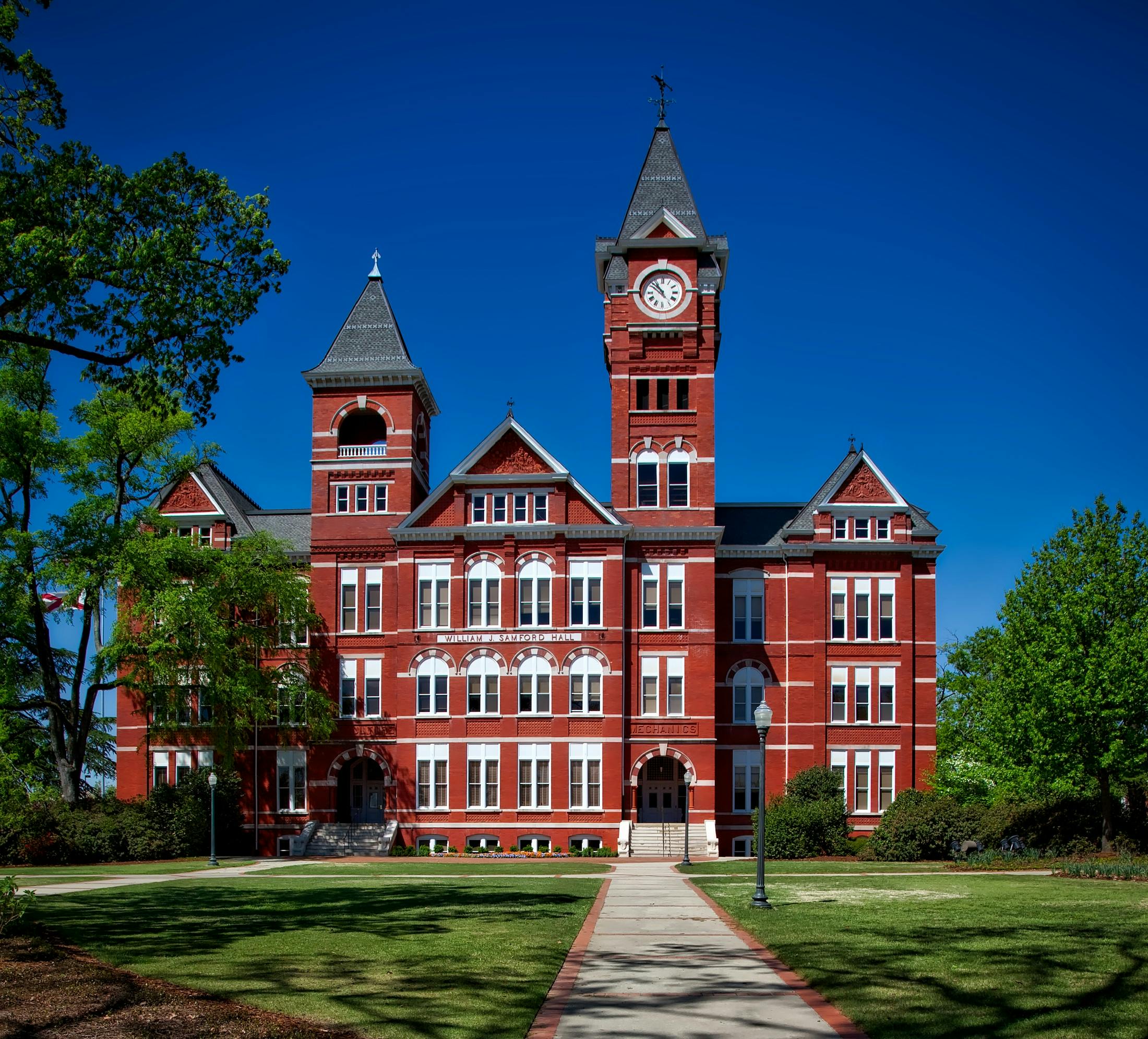
University of Oxford: The PPE Powerhouse
The University of Oxford’s pre-eminence in International Relations is inseparable from its world-famous Philosophy, Politics, and Economics (PPE) degree, a program that has educated dozens of world leaders. The Department of Politics and International Relations (DPIR) is the largest in the UK, with research clusters that directly inform its teaching on topics from cybersecurity to climate governance. Oxford’s tutorial system remains a critical differentiator, providing students with weekly, intensive one-on-one or two-on-one sessions where they must defend their essays against expert scrutiny.
This pedagogical rigor translates into exceptional analytical skills prized by employers. The MPhil in International Relations is a two-year research-intensive degree that serves as a direct pathway to doctoral work or high-level policy analysis roles. According to the university’s Graduate Outcomes Survey, over 90% of DPIR graduates were in employment or further study within 15 months of graduation, with a significant cohort entering the UK Civil Service Fast Stream, the United Nations, and major international NGOs. The department’s research is anchored by centers like the Centre for International Studies, which produces policy-relevant work on conflict and cooperation.
Sciences Po Paris: Europe’s Diplomatic Engine
Sciences Po Paris stands as the continental European leader for International Relations, a position built on its unique multi-disciplinary curriculum and deeply embedded practitioner network. The Paris School of International Affairs (PSIA) is the institution’s graduate crown jewel, offering a vast array of concentrations unmatched by any other European school, from arms control to international energy policy. A defining feature is the requirement for all undergraduate students to spend their third year abroad at one of Sciences Po’s 470 partner universities, institutionalizing a global perspective from the outset.
PSIA’s faculty is split evenly between tenured academics and high-level practitioners, including former ministers, ambassadors, and heads of international organizations. This dual structure ensures that theoretical frameworks are immediately grounded in operational reality. Career outcomes are a central part of Sciences Po’s value proposition. The school’s 2024 employment survey indicated that 87% of PSIA graduates were employed within six months, with 40% working in the public sector and international organizations. Another 38% entered the private sector, predominantly in consulting, finance, and multinational corporations, demonstrating the versatility of the school’s training in geopolitical risk analysis.
London School of Economics and Political Science (LSE): A Global Social Science Hub
The London School of Economics and Political Science (LSE) offers an International Relations education steeped in a uniquely theoretical and methodologically rigorous tradition. The Department of International Relations is one of the oldest and largest in the world, known for its strength in international political theory, security studies, and foreign policy analysis. The LSE approach is distinct: it treats IR not just as a policy subject but as a core social science, demanding proficiency in both qualitative and quantitative methods.
This intellectual environment attracts a fiercely competitive and international student body, with over 70% of its graduate students coming from outside the UK. The flagship MSc in International Relations is a one-year program that culminates in a 10,000-word dissertation, a project that often serves as a launching pad for published research or policy papers. LSE’s CareerHub data consistently places the department among the top for graduate outcomes. Within 15 months of graduation, a large proportion of MSc graduates secure roles in foreign ministries, the UN system, and leading think tanks like Chatham House and the International Institute for Strategic Studies. The median salary for LSE politics and IR graduates is among the highest in the UK, frequently exceeding £38,000 within a year of completion.
Princeton University: The Woodrow Wilson School’s Analytical Rigor
Princeton University’s School of Public and International Affairs (SPIA), formerly the Woodrow Wilson School, offers a highly selective and analytically driven program. The undergraduate major requires a core sequence in statistics and economics, ensuring all students can engage with policy through a quantitative lens. This focus on empirical analysis is a hallmark of Princeton’s approach to international relations, preparing students to design and evaluate policy interventions rather than simply describe them.
At the graduate level, the two-year Master in Public Affairs (MPA) provides a full-tuition scholarship for all admitted students, a policy that ensures the program attracts the most qualified candidates regardless of their financial background. The curriculum is centered on a policy workshop where student teams tackle real-world problems for external clients, from the U.S. State Department to international NGOs. SPIA’s Office of Career Services reports that a significant portion of its MPA graduates enter the U.S. Foreign Service, with others moving into multilateral development banks and impact investing. The combination of full funding, rigorous quantitative training, and a powerful alumni network in Washington D.C. creates a uniquely strong value proposition.
University of Cambridge: History, Law, and Global Order
The University of Cambridge approaches International Relations through a distinctive combination of historical depth, legal frameworks, and political theory. The Department of Politics and International Studies (POLIS) is a vibrant research community with particular strengths in the history of political thought, international law, and critical security studies. Cambridge’s collegiate system adds another layer of intellectual life, with small-group supervisions that mirror Oxford’s tutorials in their intensity and personalized feedback.
The MPhil in International Relations and Politics is a nine-month master’s program that is highly theoretical, making it an ideal preparation for PhD work. Students are immersed in the foundational texts and contemporary debates that shape global order, from the works of Kant and Grotius to modern constructivist theory. POLIS graduates are highly sought after in academia, but also in law, diplomacy, and journalism. Cambridge’s careers service data indicates that a large percentage of MPhil graduates proceed to doctoral study at top-tier institutions, while those entering the job market find positions in foreign offices, international courts, and elite media organizations, leveraging their deep analytical and writing skills.
Yale University: Grand Strategy and Moral Leadership
Yale University’s contribution to International Relations is defined by its signature Grand Strategy program and an emphasis on the ethical dimensions of statecraft. The Jackson School of Global Affairs, which houses the undergraduate Global Affairs major and the Master in Public Policy (MPP) in Global Affairs, is a relatively new but rapidly ascending force. The Grand Strategy course, a year-long interdisciplinary seminar team-taught by leading historians and political scientists, is the program’s intellectual heart, studying how leaders from Pericles to the present have combined all elements of national power.
This humanistic approach, which prioritizes historical case studies and classic texts, produces graduates who are skilled in strategic thinking and narrative construction. The Jackson School’s Master in Public Policy is a small, fully funded program that places a premium on admitting students with significant international experience. Career outcomes data from the Jackson School shows its graduates moving into roles at the State Department, the National Security Council, and global strategy consultancies. The program’s focus on writing and briefing skills directly prepares students for the core functions of high-level policy advising.
University of California, Berkeley (UCB): Critical Theory and Global Development
UC Berkeley’s International Relations program stands out for its critical perspective, focusing on global inequality, development, and the role of non-state actors. The Charles and Louise Travers Department of Political Science is a powerhouse of critical theory, with faculty who have shaped academic debates on empire, hegemony, and the political economy of development. The undergraduate program is one of the most popular on campus, requiring a core course in international relations theory and a selection of regionally focused electives.
Berkeley’s strength lies in its ability to connect local activism with global movements. The Interdisciplinary Studies Field Major in International Development allows students to combine coursework from political science, economics, and environmental science to build a customized degree. The Goldman School of Public Policy offers a more applied path at the graduate level. According to Berkeley’s Career Center, graduates with an IR focus are heavily recruited by international development organizations, human rights NGOs, and social impact consulting firms, particularly those on the West Coast and in the Asia-Pacific region. The starting salary range for these roles typically falls between $60,000 and $75,000, with a high rate of placement in fellowship programs like the Fulbright and Peace Corps.
Australian National University (ANU): The Asia-Pacific Fulcrum
The Australian National University (ANU) is the southern hemisphere’s leading institution for International Relations, with an unrivaled focus on the Asia-Pacific. The Coral Bell School of Asia Pacific Affairs is a world-renowned center for the study of regional security, diplomacy, and political change, housing specialists on every major country in the region. Its location in Canberra, the nation’s capital, provides students with direct access to Australia’s Department of Foreign Affairs and Trade, as well as numerous embassies and think tanks.
ANU’s Bachelor of International Relations is a flexible degree that allows students to combine a core IR theory sequence with a language minor and a regional specialization. At the graduate level, the Master of International Relations and the Master of Strategic Studies are highly regarded by regional employers. The university’s 2024 Graduate Outcomes Survey (QILT) shows that ANU IR postgraduates have a 94% employment rate within four months of graduation, with starting salaries averaging over AUD $85,000. Graduates populate the Australian intelligence community, diplomatic corps, and regional development banks, as well as private sector roles in geopolitical risk and government relations.
Columbia University: The New York-Washington Nexus
Columbia University’s School of International and Public Affairs (SIPA) leverages its position in New York City to offer an education deeply intertwined with the operational realities of the United Nations and global finance. The Master of International Affairs (MIA) is the flagship program, a two-year degree that requires a core curriculum in economics, statistics, and management, alongside a policy concentration and a specialization in a specific analytical or management skill. The faculty is a blend of tenured economists and political scientists and an army of adjuncts who are current senior officials at the UN, World Bank, and major financial institutions.
This proximity to power is a tangible asset. SIPA students routinely intern during the academic year at UN agencies, major international NGOs, and global banks’ risk analysis departments. SIPA’s employment statistics for the class of 2024 show that 94% of MIA graduates were employed within six months, with a median starting salary of $82,000. The largest cohort, nearly 40%, entered the private sector, particularly in consulting and financial services, while 35% joined the public sector and international organizations. The dual competency in policy analysis and management makes SIPA graduates particularly valuable in multi-lateral settings.
George Washington University: The Heart of Washington D.C.
George Washington University’s Elliott School of International Affairs is one of the largest and most professionally oriented schools of its kind, embedded in the policy-making ecosystem of Washington, D.C. The school’s size is a strategic advantage, allowing it to offer an extraordinary range of specialized master’s programs, from Security Policy Studies to International Science and Technology Policy. The curriculum is unapologetically practical, with a mandatory professional skills course and a required internship, often completed at the State Department, a federal agency, or a major think tank.
The Elliott School’s faculty is a dense network of former ambassadors, NSC directors, and World Bank executives. This creates a classroom environment where theoretical discussions are immediately challenged by practical experience. The school’s Graduate Career Services reports that over 90% of its master’s graduates are employed or in further study within six months. The most common career paths are in the U.S. federal government, government contracting, and international non-profits. The starting salary for Elliott School master’s graduates averages around $65,000, with the non-monetary benefit of a career-long network concentrated in the world’s most powerful policy hub.
King’s College London: War Studies and Strategic Thought
King’s College London offers a distinctive and highly respected approach to International Relations through its Department of War Studies, a unique academic entity dedicated to the study of conflict, security, and strategy. Unlike a traditional IR department, War Studies integrates history, philosophy, and operational analysis to understand the nature of warfare and its resolution. This specialized lens attracts students intent on careers in defense, intelligence, and diplomacy.
The department’s master’s programs, such as the MA in International Relations and the MA in Intelligence and International Security, are among the most competitive in the UK. The curriculum is research-led, with faculty working on contemporary conflicts, cyber warfare, and the ethics of armed force. King’s location on the Strand in central London places it minutes from the Ministry of Defence, the Houses of Parliament, and major security think tanks. Graduate outcomes data from the university shows a clear pipeline into the UK’s Foreign, Commonwealth and Development Office, the Ministry of Defence, NATO, and private intelligence firms. The specialized nature of the degree commands a premium in the security sector, with graduates often starting on salaries above the UK national average for social science postgraduates.
Leiden University: A Dutch Tradition of Global Law
Leiden University in the Netherlands anchors its International Relations strength in a deep tradition of international law and global governance. The university is home to The Hague, the city of peace and justice, and its programs are directly shaped by this proximity. The BA in International Studies offered at the Faculty of Humanities takes a multi-disciplinary, area-studies approach, requiring students to gain proficiency in a non-Western language and complete a regional specialization.
At the graduate level, the MSc in International Relations and Diplomacy is a collaboration between Leiden’s Institute of Political Science and the Clingendael Institute, the Netherlands’ leading diplomatic academy. This partnership gives students a unique blend of academic research and practical diplomatic training. Leiden’s career data indicates that many of its IR graduates find positions in the numerous international courts and tribunals in The Hague, including the International Court of Justice and the International Criminal Court. Others enter the European Union institutions, the Dutch Ministry of Foreign Affairs, and a wide range of NGOs focused on human rights and international law. The program’s strength in law and institutions provides a clear career pathway into these specialized fields.
University of Chicago: Realism and Quantitative Methods
The University of Chicago brings a distinct intellectual tradition to the study of International Relations, characterized by a strong commitment to realism as a theoretical framework and a rigorous emphasis on quantitative methods. The Committee on International Relations (CIR) is an interdisciplinary graduate program that draws faculty from Political Science, History, and Economics. It is best known for its one-year MA program, which is structured as an intense immersion in IR theory and research design, culminating in a master’s thesis.
The Chicago School’s influence is evident in the program’s focus on rational choice theory, game theory, and statistical analysis of international phenomena like war, trade, and alliances. This methodological rigor is a key differentiator, preparing graduates exceptionally well for data-driven policy analysis and PhD programs. The CIR’s placement record is stellar, with a high proportion of MA graduates gaining admission to top political science doctoral programs. Those entering the professional world are recruited by economic consulting firms, the intelligence community, and research institutions that value advanced analytical skills. The program is small and selective, fostering a tight-knit intellectual community.
University of Toronto: Canada’s Global Affairs Leader
The University of Toronto’s Munk School of Global Affairs and Public Policy is Canada’s preeminent institution for International Relations, offering a unique synthesis of academic research and practical policy engagement. The school’s flagship Master of Global Affairs (MGA) is a two-year program that includes a mandatory summer internship and a major team-based capstone policy project for a real-world client, such as a government ministry or international corporation.
The Munk School has built specialized research and teaching strengths in global innovation policy, cyber security, and the future of the multilateral system. Its faculty includes former Canadian ambassadors, senior bureaucrats, and leading scholars. The school’s employment report for the MGA class of 2024 shows a 96% employment rate within nine months, with graduates working across the Canadian federal government, the UN system, global consulting firms, and international banks. The median starting salary for the cohort was CAD $78,000. The program’s location in Toronto, Canada’s financial and cultural capital, also provides unique opportunities at the intersection of global finance and policy.
National University of Singapore (NUS): Asia’s Rising Power Analyst
The National University of Singapore (NUS) has rapidly ascended as a crucial hub for understanding international relations from an Asian perspective. The Lee Kuan Yew School of Public Policy (LKYSPP) is the center of gravity for graduate study, offering a Master in International Affairs (MIA) that focuses on the political, economic, and security dynamics of the Asia-Pacific. The curriculum is designed to equip students with the analytical tools to navigate the region’s complex geopolitical landscape, from the South China Sea to ASEAN’s institutional evolution.
NUS’s advantage lies in its location at the heart of a dynamic and contested region. The LKYSPP faculty includes former senior diplomats and policymakers from across Asia, providing direct insight into regional decision-making. The school’s career services data shows that its MIA graduates are highly sought after by foreign ministries across Asia, regional headquarters of multinational corporations, and international organizations with a strong Asia focus, such as the Asian Development Bank and APEC. The starting salary for NUS MIA graduates is competitive with top Western programs, and the school’s network is becoming a powerful asset for anyone building a career in Asian affairs.
University of California, Los Angeles (UCLA): Political Economy and Security
UCLA’s International Relations program is housed within a top-ranked political science department with deep strengths in international political economy and security studies. The undergraduate Global Studies major is one of the most popular interdisciplinary programs on campus, requiring a core sequence in globalization theory and a year of foreign language study. The program encourages students to develop a thematic and regional concentration, from human rights in Latin America to security in East Asia.
At the graduate level, the Department of Political Science offers a highly selective PhD program where students work closely with faculty on cutting-edge research in areas like international trade, the political economy of development, and the causes of war. The Burkle Center for International Relations serves as a hub for public events and research, bringing senior policymakers to campus. UCLA’s Career Center reports that IR graduates enter a wide range of fields, with a strong pipeline into entertainment and technology firms with global operations, reflecting the university’s location in Los Angeles. Others pursue careers in government, law, and international development, with starting salaries typically in the $55,000 to $70,000 range.
Freie Universität Berlin: European Integration and Eastern Europe
Freie Universität Berlin offers a distinct perspective on International Relations, grounded in the study of European integration, transatlantic relations, and the politics of Eastern Europe and Russia. The Otto Suhr Institute of Political Science is one of Germany’s leading political science faculties, and its IR program is deeply integrated with the city’s vibrant policy community, including the German Council on Foreign Relations (DGAP) and numerous think tanks.
The MA in International Relations is a two-year program that combines theoretical training with a strong focus on research methods and a required internship. A defining feature is the program’s specialized expertise in the post-Soviet space and the politics of European Union enlargement. This regional specialization provides a clear career niche for graduates. According to the university’s graduate surveys, alumni of the program frequently find positions within the German Federal Foreign Office, EU institutions in Brussels, and international organizations operating in Eastern Europe. The program’s strong reputation in Germany, combined with its low tuition fees, makes it an exceptionally high-value option for students focused on this region.
University of Tokyo: Japan’s Global Policy Architect
The University of Tokyo’s Graduate School of Public Policy (GraSPP) is Japan’s premier institution for cultivating international policy leaders. The school offers a Master of Public Policy, International Program (MPP/IP), which is taught entirely in English and attracts a highly diverse student body. The curriculum is explicitly designed to bridge Western and Asian perspectives on global governance, development, and security.
A key strength of the program is its integration with Japan’s policy-making apparatus. Many courses are taught by senior officials from the Ministry of Foreign Affairs and the Ministry of Finance, providing students with an insider’s view of Japanese foreign policy. The school’s Professional Career Support Office maintains strong relationships with international organizations, and a number of graduates secure positions at the UN, the World Bank, and the Asian Development Bank each year. For those entering the private sector, the University of Tokyo brand is the most powerful in Japan, opening doors to top-tier trading companies like Mitsubishi Corporation and global consulting firms. The MPP/IP serves as a critical launchpad for a career at the nexus of Japan and the wider world.
Peking University: China’s Window on World Affairs
Peking University’s School of International Studies (SIS) is the leading institution in China for the study of international relations, offering an essential perspective on Chinese foreign policy and its role in the global order. The school’s programs, particularly its English-taught Master’s and PhD tracks, attract students and diplomats from around the world who seek to understand Beijing’s worldview from the inside. The curriculum covers IR theory, but its core strength is the deep, historically grounded analysis of China’s diplomatic strategy and its relations with major powers and developing nations.
SIS faculty include some of China’s most influential foreign policy thinkers, and the school is a key node in the country’s academic and policy-making ecosystem. For international graduates, the program provides a credential that is highly valued by foreign ministries, multinational corporations operating in China, and international organizations seeking to engage with Beijing. For Chinese graduates, it is the traditional pathway into the Ministry of Foreign Affairs. The career outcomes are bifurcated but uniformly strong: international graduates often move into diplomacy, consulting, and journalism focused on China, while domestic graduates dominate the incoming class of China’s diplomatic corps.
Instituto Tecnológico Autónomo de México (ITAM): Latin America’s Policy Engine
ITAM is Mexico’s premier institution for the social sciences, and its International Relations program is the most influential in the Spanish-speaking world. The Department of International Studies offers a rigorous, economics-heavy curriculum that is distinct from the more historical or legalistic approaches common in Latin America. All IR students at ITAM complete a substantial sequence in economic theory and quantitative methods, producing graduates who are comfortable with the technical dimensions of trade negotiations, financial regulation, and development policy.
This analytical rigor makes ITAM graduates highly competitive for roles in the Mexican Foreign Service, the Central Bank, and international financial institutions. The school’s career services office reports a very high placement rate, with a significant number of alumni working in the World Bank, the Inter-American Development Bank, and the OECD. Others are recruited by the private sector, particularly in the energy and finance industries, where their understanding of political risk and regulatory policy is a significant asset. ITAM’s program is the undisputed pathway to the upper echelons of Mexico’s foreign policy establishment.
FAQ
Q1: How much can I expect to earn with a master’s in International Relations from a top school?
Salaries vary widely by sector and location. However, data from top programs provides a clear range. For example, Harvard Kennedy School MPP graduates reported a median starting salary over $85,000 in 2024, while Columbia SIPA MIA graduates had a median of $82,000. In contrast, graduates entering the non-profit or government sectors may start between $55,000 and $65,000, but often with faster progression and significant non-monetary benefits.
Q2: What is the difference between a Master of International Affairs (MIA) and an MSc in International Relations?
An MIA, offered by schools like Columbia SIPA and NUS LKYSPP, is typically a professional degree with a core curriculum in management, economics, and policy analysis, designed for immediate practitioner entry. An MSc, common at LSE, Oxford, and Leiden, is a more theoretically oriented academic degree with a strong research methods component and a required dissertation, often serving as a stepping stone to a PhD or a research-intensive role.
Q3: Is it better to study International Relations in a capital city like Washington D.C. or London?
Studying in a political capital offers unmatched access to internships, practitioner-faculty, and networking events. Programs at George Washington University or Sciences Po have a built-in advantage here. However