general
Top 20 Universities for Political Science 2026 (QS): Programs, Faculty & Outcomes
A data-driven guide to the leading political science schools worldwide based on QS 2026 indicators. Compare programs, faculty strength, research impact, and career outcomes to find the right fit for your academic goals.
Political science remains one of the most consequential fields of study for those seeking to understand power, governance, and global affairs. According to the QS World University Rankings by Subject 2026, competition among top-tier institutions has intensified, with research output in international relations and comparative politics growing by over 18% since 2023. The U.S. Bureau of Labor Statistics projects a 6% increase in demand for political scientists through 2033, driven by expanding needs in policy analysis and data-driven governance consulting.
Selecting the right program requires more than glancing at a single metric. You need to evaluate faculty research productivity, methodological training, internship pipelines into organizations like the United Nations or the World Bank, and post-graduate placement records. This guide dissects the 20 leading political science departments for 2026, emphasizing program architecture, faculty expertise, and measurable graduate outcomes, so you can make an informed decision aligned with your career trajectory.

How the QS 2026 Political Science Subject Ranking is Built
The QS subject rankings rely on a composite of four indicators: Academic Reputation, Employer Reputation, Research Citations per Paper, and the H-index. For political science, academic reputation carries the heaviest weight, drawing from a global survey of over 130,000 academics. This metric captures perceived excellence in teaching and research quality.
Employer reputation, the second pillar, surveys approximately 75,000 hiring managers worldwide, offering a proxy for how well graduates perform in the labor market. The research citations and H-index metrics measure the impact and productivity of a department’s scholarly output. A shift in the 2026 cycle shows increased weighting on citations per paper, reflecting a broader trend toward valuing high-impact, specialized research over sheer volume. This methodological adjustment has slightly reshuffled the upper tiers, rewarding departments with dense, frequently cited theoretical and empirical work.
Harvard University: Integrating Theory with Data Science
Harvard’s Department of Government consistently anchors the top spot, and 2026 is no exception. The department has aggressively expanded its quantitative methods curriculum, integrating machine learning and causal inference into core political science training. This pivot reflects the discipline’s evolution toward data-intensive research.
Faculty strength remains a decisive factor. The department houses multiple members of the National Academy of Sciences and recipients of the Johan Skytte Prize. Graduate placement data shows that over 40% of recent PhDs secure tenure-track positions at R1 universities within three years, while another significant cohort enters senior advisory roles in federal agencies and international NGOs. Undergraduate concentrations in political methodology have tripled since 2020, signaling strong student demand for empirical skills.
University of Oxford: Deep Historical Roots, Global Reach
Oxford’s Department of Politics and International Relations leverages its Oxford School of Global and Area Studies to offer unmatched regional expertise. The program emphasizes political theory and historical institutionalism, but recent hires in computational social science have broadened its methodological scope.
The tutorial system remains a distinctive advantage, providing intensive one-on-one mentoring that cultivates rigorous analytical writing. Employer reputation scores are buoyed by a steady pipeline into the UK Civil Service Fast Stream, the European External Action Service, and major think tanks like Chatham House. Research output in International Organization and World Politics journals per capita ranks among the highest globally, reinforcing Oxford’s status as a research powerhouse.
Sciences Po Paris: The European Epicenter
Sciences Po has solidified its position as the premier continental European institution for political science. The curriculum is structured around a core of law, economics, and history, followed by advanced specialization in comparative politics or international relations. A mandatory third-year abroad and a robust internship culture ensure that graduates enter the job market with substantial professional experience.
The Paris School of International Affairs (PSIA) within Sciences Po attracts a highly diverse cohort, with over 70% of students coming from outside France. This multicultural environment is a magnet for recruiters from the OECD, UNESCO, and the European Commission. Faculty research focuses heavily on European integration, post-colonial studies, and digital governance, areas where Sciences Po’s citation impact has seen double-digit growth.
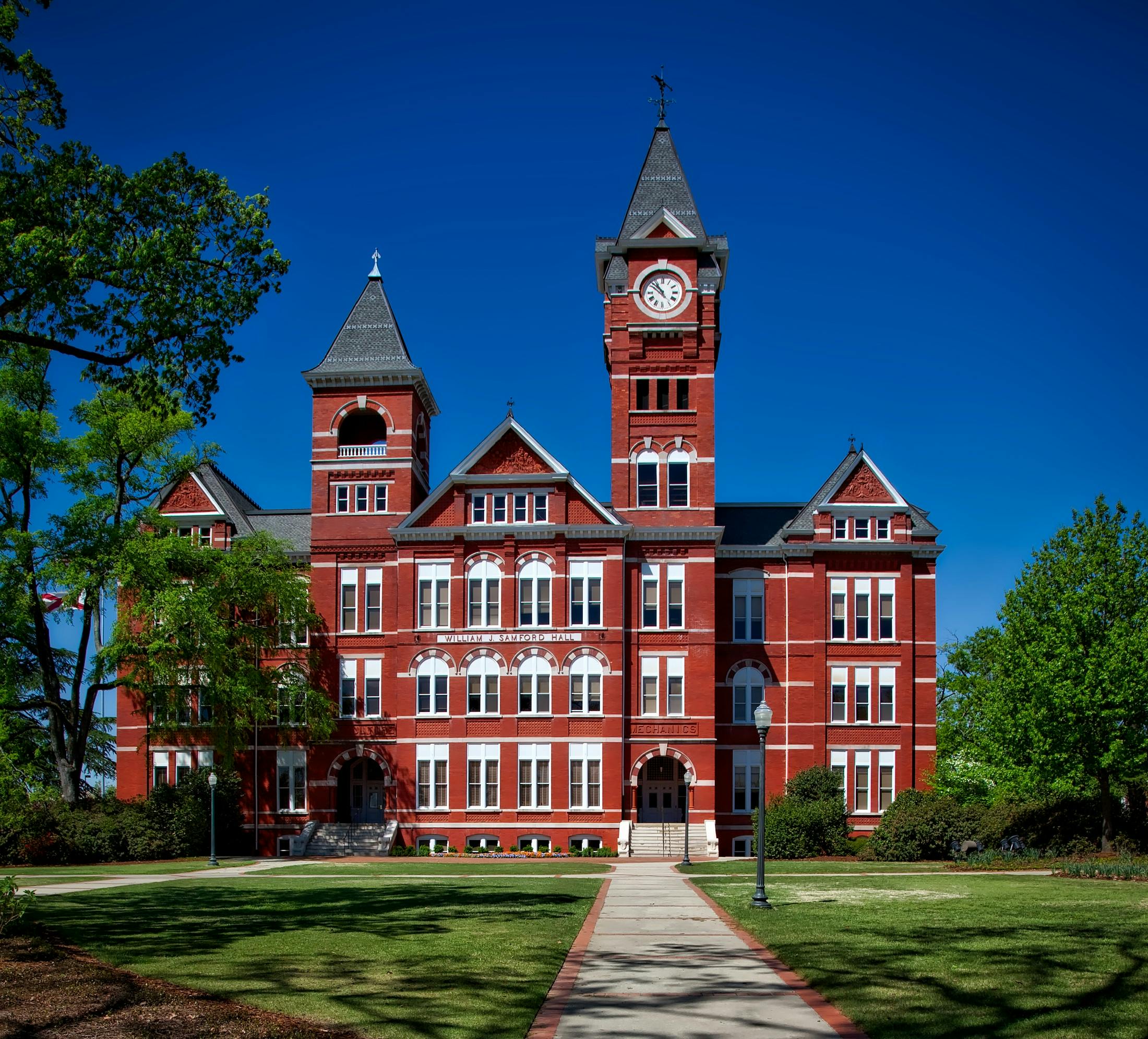
Massachusetts Institute of Technology: The Quantitative Edge
MIT’s political science department is deliberately compact, focusing intensively on positivist methodologies and formal theory. The program is ideal for students who view political phenomena through the lens of mathematical models and advanced statistics. The department’s Security Studies Program maintains close ties with the defense and intelligence communities.
A standout feature is the Undergraduate Research Opportunities Program (UROP), which embeds students in faculty labs working on conflict prediction, election forensics, and political communication. Outcomes data indicates that MIT political science graduates command some of the highest starting salaries in the field, particularly those entering consulting and data science roles. The department’s H-index is disproportionately high relative to its size, driven by landmark publications on causal identification.
Stanford University: Bridging Silicon Valley and Governance
Stanford’s Political Science Department capitalizes on its proximity to the technology sector. The program has pioneered courses on cyber policy, platform governance, and AI ethics, making it a unique destination for students interested in the intersection of technology and politics. Faculty members frequently hold joint appointments in computer science and law.
The Stanford Center on Philanthropy and Civil Society provides rich research opportunities, while the Hoover Institution offers fellowships that place graduate students in direct contact with policymakers. Employer reputation is exceptionally strong on the West Coast and in Asia, with alumni founding civic-tech startups and leading policy teams at major tech firms. The department emphasizes mixed-methods research, blending ethnographic fieldwork with large-N statistical analysis.
University of Cambridge: Tradition Meets Critical Inquiry
Cambridge’s Department of Politics and International Studies (POLIS) distinguishes itself through a strong emphasis on critical theory, intellectual history, and postcolonial thought. The program encourages deep philosophical engagement with political concepts, complementing its growing strength in quantitative peace and conflict research.
The Centre of Development Studies and the Centre for the Study of Existential Risk provide interdisciplinary hubs that attract high-caliber doctoral candidates. Graduate outcomes show a strong tilt toward academia and high-level journalism, with a notable presence of alumni at The Economist and the Financial Times. The Cambridge Endowment for Research in Finance (CERF) funds several political economy projects, enhancing the department’s research capacity.
Princeton University: The Theory and Methods Powerhouse
Princeton’s Department of Politics is renowned for its balanced strength across political theory, American politics, comparative politics, and international relations. The department has historically produced a disproportionate share of the discipline’s leaders, including numerous university presidents and MacArthur Fellows.
A defining feature is the Research Program in Political Economy, which co-enrolls students with the economics department, providing rigorous training in game theory and microeconomic foundations. Placement data reveals a near-perfect record for PhD candidates seeking academic positions, with the majority landing at top-25 departments. Undergraduate independent work, a two-year thesis project, serves as a powerful credential for competitive fellowships like the Rhodes and Marshall.
Yale University: The Law and Politics Nexus
Yale’s Department of Political Science benefits from an unusually porous boundary with the Yale Law School, facilitating a rich exchange in constitutional law, international legal theory, and human rights. The program is a top choice for students planning to pursue a joint JD/PhD or careers in public interest law.
Faculty research clusters around identity politics, distributive justice, and legislative behavior. The Institution for Social and Policy Studies (ISPS) funds extensive experimental research, including large-scale field experiments in developing countries. Employer reputation metrics are boosted by a steady flow of graduates into prestigious clerkships, the U.S. State Department, and human rights organizations.
London School of Economics and Political Science: A Global Hub
LSE’s Department of Government is one of the largest and most internationally diverse in the world. The program offers an extensive range of MSc specializations, from Global Politics to Political Economy of Late Development. This breadth allows students to tailor their degrees with surgical precision.
The school’s location in central London provides unparalleled access to visiting speakers, including heads of state and central bank governors. LSE’s career outcomes data is striking: within six months of graduation, over 90% of MSc students are employed or pursuing further study, with a significant portion entering investment banking, political risk consulting, and multilateral institutions. The department’s research on populism and democratic backsliding has defined scholarly and public debates.

University of California, Berkeley (UCB): The Public University Standard
Berkeley’s Travers Department of Political Science combines a strong commitment to public service with cutting-edge empirical research. The program is a leader in American political behavior, with the Berkeley Institute for Young Americans generating influential longitudinal studies.
Faculty expertise in race, ethnicity, and politics is particularly deep, reflecting the university’s history of social engagement. The Charles and Louise Travers Program in Ethics and Accountability in Government connects students with internships in Sacramento and Washington, D.C. Graduate placement spans top research universities and influential policy organizations like the Urban Institute. Berkeley’s political theory group remains one of the most vibrant in the country, with strengths in democratic theory and the history of political thought.
Columbia University: Quantitative Methods and International Focus
Columbia’s Department of Political Science has invested heavily in quantitative methodology, hiring a cluster of junior faculty specializing in machine learning and text analysis. The program maintains a traditional strength in international relations, supported by the Saltzman Institute of War and Peace Studies.
The university’s New York City location facilitates adjunct appointments from the United Nations and Wall Street, enriching the practitioner dimension of the curriculum. Graduate placement data shows a dual track: a strong academic pipeline, particularly to liberal arts colleges and international universities, and a robust flow into data science and strategic consulting roles. The department’s annual Columbia Political Review provides undergraduates with a platform for serious scholarly writing.
University of Chicago: The Idea-Driven Institution
Chicago’s Department of Political Science is synonymous with a commitment to rigorous theory-building and intellectual history. The program is less focused on contemporary policy debates and more on foundational questions of political order, justice, and power. The Committee on Social Thought allows for highly individualized doctoral study.
Faculty like John Mearsheimer and James Robinson anchor a department that values paradigm-shifting scholarship. The Chicago School tradition of intensive textual analysis and formal modeling remains alive. Outcomes for graduates are heavily oriented toward academia and elite think tanks like the RAND Corporation. The undergraduate program is known for its demanding core sequence in classic texts, which cultivates exceptional analytical writing skills.
Australian National University: Asia-Pacific Leadership
ANU’s School of Politics and International Relations is the leading center for Asia-Pacific security studies and comparative regionalism. The Coral Bell School of Asia Pacific Affairs houses some of the world’s foremost experts on Chinese foreign policy, Southeast Asian politics, and Pacific Islands governance.
The program’s strategic location in Canberra provides students with direct access to Australian government departments, including the Department of Foreign Affairs and Trade and the Office of National Intelligence. Research impact is amplified through the ANU Centre for Social Research and Methods, which runs the Australian Election Study, a critical longitudinal data source. Graduate employability is exceptionally high within the Australian Public Service and regional development banks.
University of California, Los Angeles (UCLA): Race, Ethnicity, and Politics
UCLA’s Department of Political Science has built a formidable reputation as the national leader in the study of race, ethnicity, and politics (REP) . The program’s methodological pluralism, spanning formal theory, ethnography, and advanced statistics, supports a comprehensive understanding of political inequality.
The Luskin School of Public Affairs offers joint degree pathways that strengthen applied research skills. Faculty research on immigration, urban politics, and Latino political behavior is widely cited in both academic and policy circles. Los Angeles itself serves as a living laboratory for studying demographic change and coalitional politics. Graduates are heavily recruited by California state government, civil rights organizations, and universities seeking to build their own REP subfields.
University of Toronto: Canada’s Research Giant
The University of Toronto’s Department of Political Science is the largest and most research-intensive in Canada. The program offers exceptional depth in comparative political economy and development studies, with the Munk School of Global Affairs and Public Policy providing a professional interface.
The department’s strength in quantitative methods is supported by the Data Science Lab for the Social Sciences, which trains students in R, Python, and GIS applications. Employer reputation is robust across Canadian federal agencies, the UN system, and global consulting firms. The tri-campus structure (St. George, Scarborough, Mississauga) allows for specialized streams, including environmental politics and food security policy. Research citations per paper have risen steadily, reflecting a strategic focus on high-impact journal placements.
National University of Singapore (NUS): The Asian Powerhouse
NUS’s Department of Political Science has rapidly ascended, driven by strategic investment in international relations theory and Asian comparative politics. The Lee Kuan Yew School of Public Policy serves as a sister institution, offering dual-degree programs that combine academic rigor with governance training.
The program’s location in Singapore provides a unique vantage point for studying ASEAN diplomacy, great-power competition, and smart-city governance. Faculty research on non-Western international relations theory has opened new scholarly frontiers, generating substantial citation impact. Employer reputation scores are climbing, with graduates entering Singapore’s elite civil service, regional headquarters of tech multinationals, and sovereign wealth funds.
Freie Universität Berlin: Critical European Scholarship
Freie Universität Berlin’s Otto Suhr Institute of Political Science is the largest political science institute in Germany. The program is characterized by a strong tradition of critical theory, peace and conflict studies, and European integration research. The Berlin Graduate School for Global and Transregional Studies provides a structured doctoral framework.
The institute’s location in the German capital offers rich opportunities for internships with the Bundestag, federal ministries, and a dense network of NGOs and political foundations. Research output on migration politics, environmental governance, and the transformation of the European public sphere is particularly prominent. The program’s affordability, given Germany’s low-tuition model, makes it an increasingly attractive destination for international students seeking high-quality political science education without debt.
University of Copenhagen: Nordic Excellence
The University of Copenhagen’s Department of Political Science has emerged as a Nordic leader, with particular strengths in public administration, welfare state studies, and voter behavior. The program is deeply integrated with the Danish Institute for Social Science Research (VIVE), facilitating large-scale registry-based research.
The department’s emphasis on causal identification and natural experiments has yielded publications in top journals like the American Political Science Review. Teaching quality is consistently rated highly, with a pedagogical model that emphasizes small-group problem-solving. Career outcomes are excellent within the Nordic labor market, with graduates populating the Danish Ministry of Finance, the European Environment Agency, and a growing political tech sector in Copenhagen.
University of Tokyo: Japan’s Premier Program
The University of Tokyo’s Graduate School of Law and Politics offers Japan’s most prestigious political science training. The program combines a rigorous grounding in Japanese political thought and constitutional law with a growing emphasis on quantitative international relations. The Institute for Advanced Studies on Asia provides a hub for regional expertise.
The program’s long-standing elite status translates into a dominant employer reputation within Japan’s public and private sectors. Graduates routinely enter the Ministry of Foreign Affairs, the Bank of Japan, and major trading companies. Recent initiatives to internationalize the curriculum, including English-taught degree tracks, have broadened its appeal. Research on Japanese security policy and East Asian regionalism is closely watched by global policymakers.
University of Amsterdam: Media, Movements, and Politics
The University of Amsterdam’s Department of Political Science is at the forefront of research on digital media, social movements, and political communication. The Amsterdam Institute for Social Science Research (AISSR) fosters a highly collaborative, interdisciplinary environment.
The program is methodologically diverse, with strong qualitative and interpretive traditions alongside a growing quantitative component. The Amsterdam School of Communication Research (ASCoR) provides unique opportunities for joint work on misinformation and polarization. Employer reputation benefits from Amsterdam’s status as a hub for international organizations and creative industries. Research on populism and party system change in Europe has placed the department at the center of contemporary scholarly debates.

How to Evaluate Programs Beyond the Ranking
While the QS ranking provides a useful macro-level snapshot, your decision should be driven by micro-level alignment. First, scrutinize the methodological orientation of each department. A program strong in formal theory may frustrate a student seeking ethnographic fieldwork training. Read the recent syllabi of core courses to gauge the intellectual climate.
Second, examine placement data with a critical eye. A department’s overall ranking may mask weak outcomes in your specific subfield. Request detailed records of where PhD graduates in comparative politics, for example, have secured jobs over the last five years. Third, consider the research infrastructure: access to survey labs, experimental platforms, and computational clusters can significantly impact your own productivity. Finally, the faculty-to-student ratio in your area of interest matters more than the department’s overall size; a renowned scholar is of little use if they are never available for mentorship.
FAQ
Q1: What is the difference between a BA in Political Science and a BA in International Relations?
A BA in Political Science typically covers a broader set of subfields, including American politics, comparative politics, political theory, and methodology. A BA in International Relations focuses specifically on state interactions, global governance, and foreign policy. The QS ranking encompasses both under the Political Science category, but individual departments may house them in separate schools.
Q2: How much does a political science degree cost at these top universities?
Tuition varies dramatically. For the 2026 academic year, annual tuition for a master’s program at a US private institution like Harvard or Stanford exceeds $55,000, while European public universities such as Freie Universität Berlin or the University of Copenhagen charge minimal fees, often below $500 per semester for EU students and between $5,000 and $15,000 for non-EU students. Living costs in cities like London and New York can add $20,000 to $30,000 annually.
Q3: What are the career prospects for political science graduates outside of academia?
Approximately 65% of political science PhDs from top-20 programs enter non-academic roles within ten years, according to a 2025 American Political Science Association survey. Common paths include policy analysis at think tanks, political risk consulting at firms like Eurasia Group, data science in the public sector, and roles in international organizations such as the World Bank, where starting salaries for consultants range from $60,000 to $90,000.
Q4: Which university is best for quantitative political methodology?
MIT and Columbia currently lead in quantitative political methodology, both having invested heavily in faculty specializing in machine learning and causal inference. Stanford’s integration with computer science also makes it a top choice. These programs require strong backgrounds in statistics and calculus, with many admitted PhD students scoring above the 90th percentile on the GRE quantitative section.
参考资料
- QS Quacquarelli Symonds 2026 QS World University Rankings by Subject: Politics & International Studies
- U.S. Bureau of Labor Statistics 2024 Occupational Outlook Handbook: Political Scientists
- American Political Science Association 2025 APSA Graduate Placement Survey
- OECD 2025 Education at a Glance: Tertiary Education Indicators
- Australian Government Department of Education 2025 Graduate Outcomes Survey